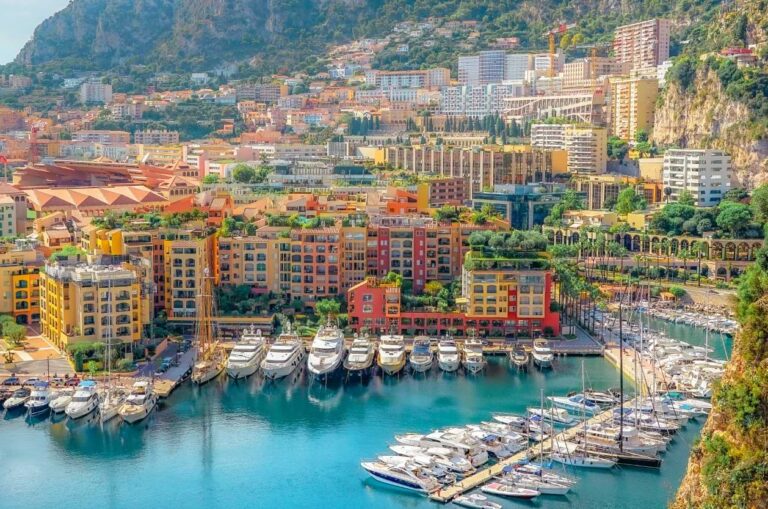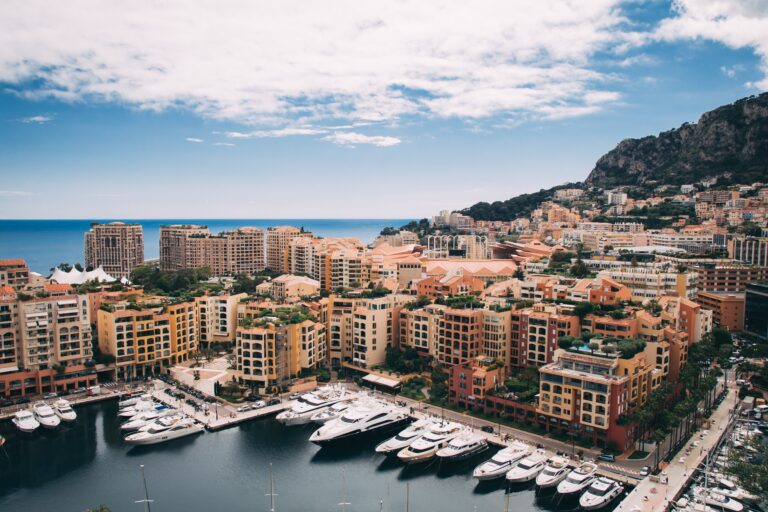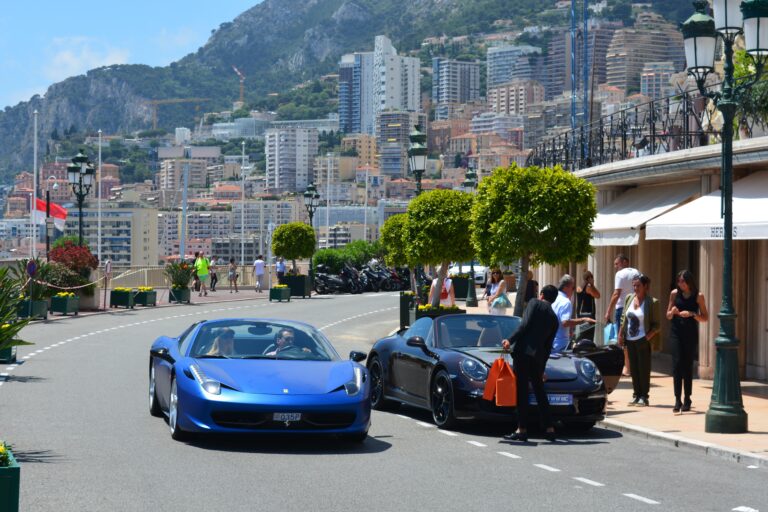
Monaco citizenship is one of the rarest and most discretionary in Europe. Fewer than 20 naturalisations are granted in a typical year, and the final decision is made personally by the Sovereign Prince — there is no formal right of access even if every legal requirement is met. The Principality has roughly 9,500 Monegasque nationals out of a population of 38,000, the rest being foreign residents.
This guide covers what Monaco citizenship actually means, the five legal pathways to acquire it, the 10-year naturalisation route in detail, the renunciation rule and its exceptions, and the practical reality of the process.
NEW REPORT
The report “The definitive guide to living in Monaco” is now available, with detailed information on Monaco’s tax framework, residence and society.
Click here to download it for free.
Quick answer: can foreigners become Monegasque citizens?
Yes, but rarely. Foreigners without Monegasque ancestry, marriage or other ties must hold a valid Monaco residence permit (Carte de Séjour) for at least 10 consecutive years before they can apply for naturalisation. The Sovereign Prince makes the final decision and is not required to give reasons. In practice, naturalisation is granted to applicants who have demonstrated long-term integration, economic contribution and clean conduct — and even then, approval is far from automatic.
Citizenship vs residency: the legal distinction
Monaco draws a sharp line between the two:
- Residency — the right to live in Monaco, granted via the Carte de Séjour. Tax benefits flow from residency (with the tax certificate) rather than citizenship. Most foreigners moving to Monaco hold residency only.
- Citizenship — formal Monegasque nationality, a Monaco passport, full civil and political rights. Acquired by birth, marriage, declaration, naturalisation or reintegration.
For the residency process, see our Monaco residency requirements guide. For tax residency, see the Monaco tax residency guide. The current page covers nationality only.
The five legal pathways to Monaco citizenship
The framework is set by the Code of Monegasque Nationality (Law 1.155 of 18 December 1992), reformed by Law 1.503 of 23 December 2020. Five paths exist:
1. By paternal descent (jus sanguinis paterni)
A child born to a Monegasque father acquires Monegasque nationality at birth. This applies regardless of where the child is born or the nationality of the mother.
2. By maternal descent
Maternal transmission applies in narrower cases:
- Birth in Monaco to unknown parents
- Mother is a Monegasque national who was herself born in Monaco
- Mother and maternal ascendants were born in Monaco and held Monegasque nationality
- Mother acquired nationality by naturalisation, reintegration or declaration of option (transmission then applies to children born after acquisition)
- Mother acquired nationality by declaration following simple adoption
The 2011 reform broadened maternal transmission considerably; before that, women could not generally pass nationality to their children.
3. By marriage (declaration of option)
Marriage to a Monegasque national does not confer citizenship automatically. After 10 years of marriage, the foreign spouse may declare an option to acquire Monegasque nationality, provided:
- The marriage is still ongoing at the time of application (widowhood without remarriage is also accepted)
- The Monegasque spouse has retained their nationality
- The applicant did not previously acquire Monegasque nationality through an earlier marriage
This route is sometimes called citizenship by declaration and is processed faster than naturalisation, though it carries a particular limitation: a nationality acquired this way cannot be transmitted to the applicant’s existing children. Future children born after acquisition follow the normal transmission rules.
4. By naturalisation
This is the only path open to most foreign HNWIs without family ties. Requirements are covered in detail below.
5. By reintegration
Former Monegasque nationals who lost their nationality (for example, by acquiring another nationality before the dual-nationality reforms) can apply for reintegration. The procedure is shorter than naturalisation and is processed by declaration rather than by Sovereign Ordinance.
Naturalisation: the 10-year route in detail
Eligibility requirements
- 10 consecutive years of legal residence in Monaco as a holder of a valid Carte de Séjour. The clock starts from the date your residence was officially established. Time spent in Monaco without a residence permit (for example, frequent visits as a non-resident) does not count.
- Demonstrated integration — familiarity with French, knowledge of Monegasque society and culture, and personal ties to the Principality. There is no formal language test, but the application file builds the picture.
- Renunciation of previous nationality — Monaco generally does not permit dual citizenship for those naturalised. The applicant must commit to renouncing their original nationality on approval. (See exceptions below.)
- Military obligations cleared — confirmation that you owe no active military duty in your country of origin.
- Clean criminal record — applicants with significant convictions in Monaco or abroad will be refused.
- Economic stability and contribution — not a formal requirement, but in practice the applicants who succeed are those who have invested, employed Monegasque nationals, paid into the Monegasque economy, or contributed to civic life.
The application process
- Submission to the Directorate of Judicial Services (Direction des Services Judiciaires). This is the body that processes nationality applications. The file includes proof of residence, criminal records from each country of past residence, marriage and birth certificates, and evidence of integration.
- Investigation phase. The administration verifies all documents, conducts background checks, and may request additional evidence. This typically takes 12-24 months.
- Consultation of the Council of State (Conseil d’État), which issues an advisory opinion. French authorities are also consulted in most cases due to the close legal cooperation between Monaco and France.
- Sovereign decision. The Prince approves or rejects by Sovereign Ordinance. Approvals are published in the Journal de Monaco. Rejections are not motivated.
- Renunciation declaration. On approval, the applicant must formally renounce their previous nationality before the new Monegasque passport is issued.
Total elapsed time from submission to passport: typically 3-5 years. The clock continues to require active residence in Monaco throughout.
The numbers
Monaco’s annual nationality grants are published in the Journal de Monaco. Recent years have seen approximately 10-20 naturalisations per year out of a Monegasque population of roughly 9,500 nationals. The acceptance rate is intentionally low — naturalisation is treated as a privilege rather than a right.
The dual-nationality rule and its exceptions
The default position is that naturalised Monegasques must renounce their previous nationality. Exceptions exist:
- Citizenship by marriage — foreign spouses who acquire by declaration after 10 years of marriage may keep their original nationality. The acquired Monegasque nationality is non-transmissible to the spouse’s pre-existing children.
- Children acquiring at birth by Monegasque parentage — they may hold dual nationality if their other country of birth or descent permits it.
- Bilateral arrangements with specific countries — these are rare. Most prospective citizens should expect renunciation to apply.
If your country of origin does not permit you to renounce nationality (some countries impose lifelong nationality), this becomes a genuine obstacle that requires legal advice in both jurisdictions.
Loss of nationality
Monegasque nationality, once acquired, is normally for life. Loss can occur in narrow cases:
- Voluntary acquisition of another nationality without prior authorisation by Sovereign Ordinance (does not apply to those who acquired nationality by marriage and were entitled to retain dual)
- Naturalised individuals who voluntarily acquire another nationality within 10 years of their Monegasque naturalisation
- Acts incompatible with the loyalty owed to the Sovereign or the State (extremely rare in practice)
Costs and fees
There is no large statutory fee for naturalisation itself. The administrative cost is modest. The real cost is in advisory and legal fees during the multi-year application, plus the opportunity cost of maintaining residence in Monaco for 10+ years (which already involves substantial financial commitment — see the residency requirements guide for the typical [currency amount=”500000″ cur=”EUR”] bank deposit and beyond).
Frequently asked questions
Can I buy Monaco citizenship?
No. Monaco does not run a citizenship-by-investment programme. There is no investment threshold that triggers a passport. Some advisors market Monaco residency as a “golden visa” alternative — that is residency, not citizenship.
How long does it really take to get Monaco citizenship?
Minimum 10 years of legal residence to apply, plus 3-5 years of processing. Realistic total: 13-15 years from arrival in Monaco to Monegasque passport, assuming a successful application.
Does Monaco allow dual citizenship?
By default no, for naturalised citizens. The marriage route allows retention of original nationality. Children born to Monegasque parents may hold dual nationality if the other country permits.
Do Monaco citizens pay tax differently from residents?
For most income types, no. Both Monegasque nationals and foreign tax residents enjoy zero personal income tax (with the French nationals exception). The main practical advantage of citizenship is civic — voting rights, full passport benefits — rather than fiscal.
Can French nationals become Monegasque citizens?
Yes, but it does not change the French tax position. Under the 1963 Franco-Monegasque tax convention, French nationals who established Monaco residency after October 13, 1957 remain subject to French income tax regardless of acquiring Monegasque nationality. This is why the French route is rarely useful for tax-driven applications.
Is the Monaco passport powerful?
Monegasque passport holders enjoy visa-free or visa-on-arrival access to roughly 170 countries, including the Schengen Area, the United Kingdom, and most of the developed world. It is comparable to a strong European passport.
What happens if my application is rejected?
The Sovereign Prince is not required to give reasons for rejection. There is no formal appeal process. Applicants typically continue maintaining residence and may reapply later, often after addressing perceived gaps in their integration profile.
Related guides
- Monaco residency requirements: complete Carte de Séjour guide
- Monaco tax residency: certificate, 183-day rule and requirements
- Monaco residency minimum stay: how many days do you need?
- Monaco taxes: the complete 2026 guide
- Is Monaco really a tax haven? Myths and facts
How we help
Monaco Relocation Group has guided clients through residency for years and continues to support those who pursue Monegasque nationality after the qualifying period. Our local presence and connections in the Principality let us coordinate with legal counsel and the relevant directorates discreetly. Contact us at [email protected] or via our contact page.
Sources
- Monaco Government: Acquiring Monegasque nationality
- Law 1.155 of 18 December 1992 (Code of Monegasque Nationality), reformed by Law 1.503 of 23 December 2020
- Légimonaco: Code of Monegasque Nationality
- Monaco Government: How to apply for a residence permit
- US Department of State: Monaco civil documents and reciprocity
 All communications are encrypted and will be treated with absolute confidentiality. Your data will never be shared with third parties.